How to choose a Preschool for your child?

ADvTECH Group • June 24, 2021

What is a Preschool?


Preschool also known as a pre-primary or nursey school is a learning phase child care facility which assists in the development of young children. Many nursery schools offer a day care programme for babies and toddlers as young as 6 months old while some Pre-primary schools admit children from the age of 18 months and upward.


Commonly, children 3 to 6 years of age are enrolled into a preschool where they are taught a combination of fundamental, play based learning, hands on activities and developmental skills. Preschools or nursery schools play an integral role in early childhood development.


Why should a child go to a preschool?


As a parent, it is normal to have concerns about sending your child to school at young age and many parents often opt to keep their children at home. However, research suggests that “children in day care gain better social and behavioural skills that give them a leg up in life”.


High-quality, and nurturing preschools can help improve a child’s reading skills, basic math skills and vocabulary in their early years of development. In addition, preschools can reinforce vital social skills such as sharing, making friends, teamwork, following simple direction and the ability to think independently. These skills can contribute to the development of a child, physically, emotionally and socially but how can you be sure that your child is ready for preschool?


Common signs that your child is ready for preschool include:


1.  Your child is toilet/potty trained


This is a requirement of many preschools as it allows children a more enjoyable experience at school. It reduces a child’s worry and anxiety around “having an accident” which can be an embarrassing and shameful experience for a young child.   Some preschools will cater for children who are not potty trained (generally in Grade 0000) and potty training will form part of the skills the children learn.


2. Your child can spend time alone (Independent Play)


Your child is comfortable in their own silence which usually indicates that they can concentrate for a longer period without getting distracted.


3. Your child can focus on a task for longer


Your child can focus on a given task without losing concentration or without getting easily distracted. This means that he/she will be able to listen to the teacher, take direction or focus on classroom tasks or homework.


4. Your child can interact with others


Your child feels comfortable in the presence of other kids and adults and can be away from their parents for a longer period. Moreover, your child is has developed social skills and can share, play and communicate with others.


5. Your child can communicate their needs


One of the most important signs that your child is ready for preschool is their ability to communicate their needs i.e. “I’m hungry”, “I want to lie down” or “my tummy hurts”. This shows that your child will be more confident in communicating their needs to their teacher.


You may see that your child possesses many of these qualities but what is better for a child, a half day or full-day preschool?


“A research study found that children who attend full-day programs are more school-ready than those who attend half-day programs.” Full day preschools allow a child more freedom to socialize, learn, explore, and play in a day.


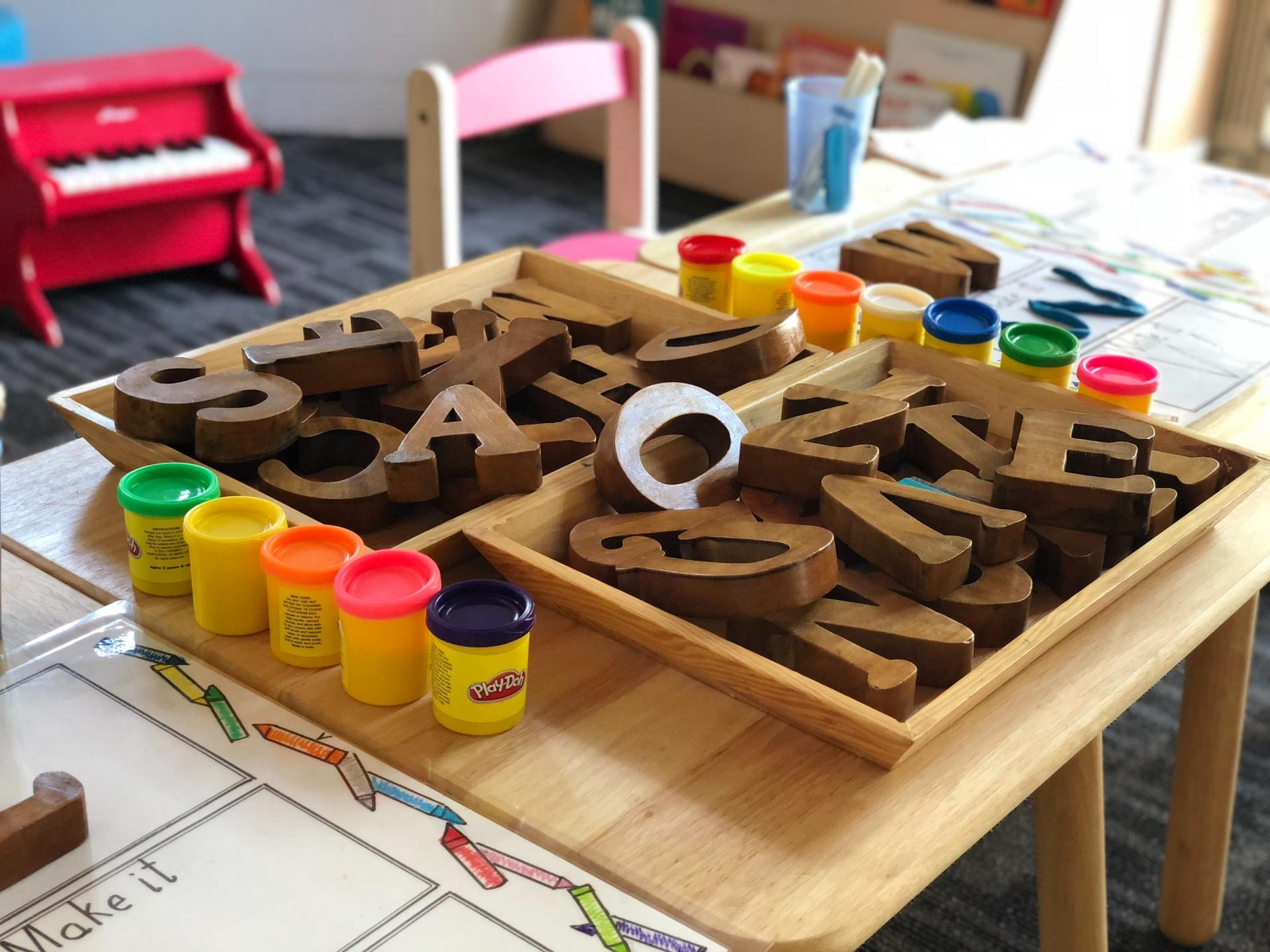
Learning through play at Trinityhouse


The Trinityhouse holistic education and care programme of a learn through play methodology is combined with a sensory integrated perceptual programme and is implemented by our highly qualified teachers.


Learn through play aims to:


  • Promote the emotional, social and physical development of the child.
  • Develop a positive attitude towards school and learning through a nurturing environment.
  • Build the foundation of all academic areas.
  • Provide an atmosphere which allows for creativity and the love of God.
  • Provide guidance in developing self-discipline.
  • Develop the ability to communicate.
  • Provide opportunities for the child to learn to reason, solve problems, make decisions, draw conclusions, and express opinions without fear and rejection.


What are the requirements for Pre- Primary at Trinityhouse?


  • Grade 0000, 000 and 00 - parents are required to submit their ID copies, birth certificate and pay the R550 application fee, once application is processed, an offer will be made to the parent and.
  • Parents/care givers will be required an enrolment fee of R5850 to secure their child’s space.
  • Grade R/0 - parents are required to provide their ID copies and need to provide their child’s birth certificate, latest school report (if available) and pay the R550 application fee.
  • For entry into Grade 0 your child will be required to complete an assessment which helps the school identify any areas of concern and this has no bearing in weather Trinityhouse accepts your child or not but is used as a starting base for our teachers to work from.


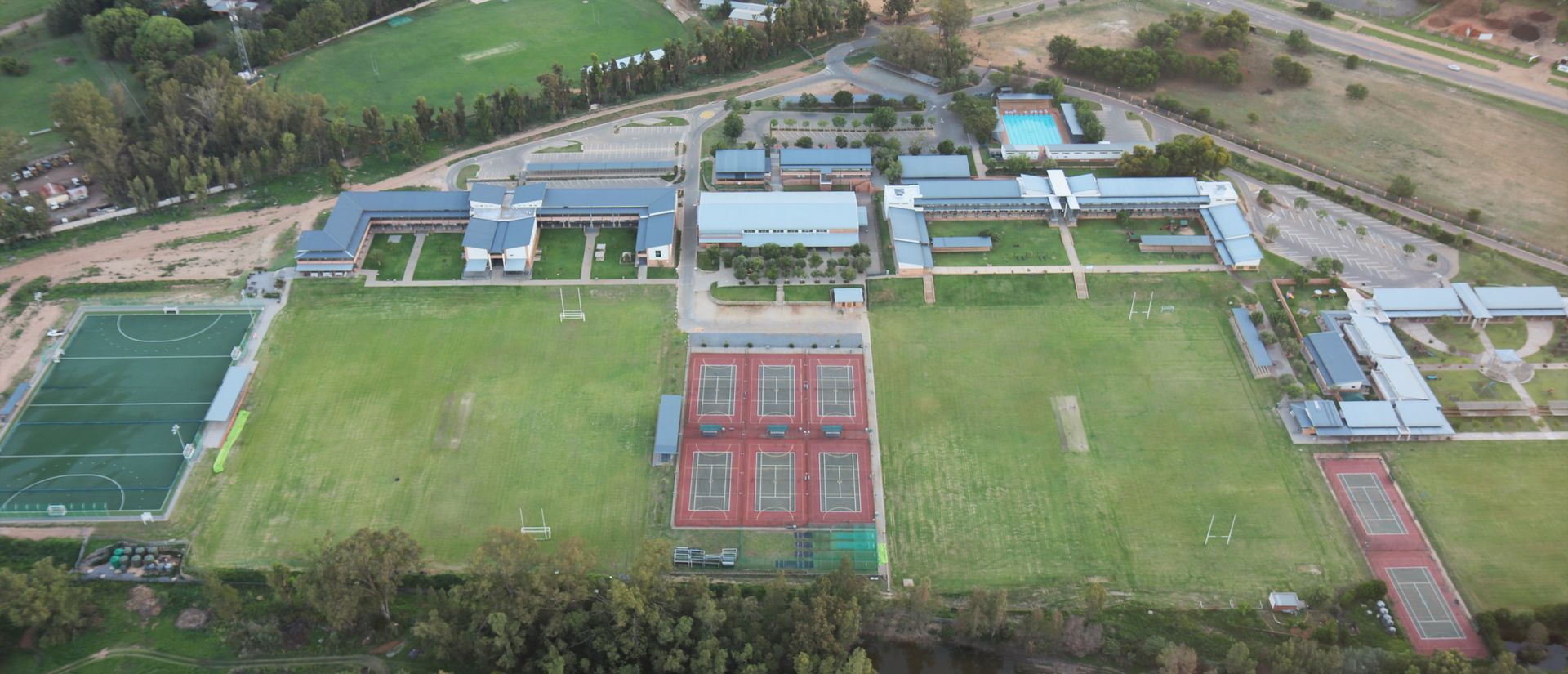
Early learning helps to promote vital life skills and assists in the physical, social and emotional developmental milestones of a child. With four beautiful and well-maintained campuses, Trinityhouse schools are a home away from home. Through our system of consistent communication between our parents and teachers we are able to provide your child with the education and care that they require at their young age.


Looking for a Preschool in Randburg (Randpark Ridge)?


For a school in Randburg. Tel:(011) 794–8564, Email: dpage@trinityhouse.co.za. Enquire or Apply.


Looking for a Preschool in Centurion?


Tel:(012) 003-1395, Email: heritagehillinquiries@trinityhouse.co.za.  Enquire or Apply.


Looking for a Preschool in Glenvista (JHB South)?


 Tel: (010) 003-3944 | 081 821 4852, Email: mmotsepe@trinityhouse.co.za. Enquire or Apply.


Looking for a Preschool in Roodepoort?


Tel: 087-353-7898 Email: admin@trinityhouse.co.za. Enquire or Apply.


At Trinityhouse, we believe in the development and growth of children from a young age. We facilitate this growth through our holistic early childhood education programme. For more information on who we are, you can find out more here.


Sources:


Early childhood education yields big benefits


Signs your child is ready for preschool


5 Signs to Know if Your Child is Ready For Preschool


How to know if your child is ready for preschool


Early education


Is in house day care right for your children


playdough on table
Add your custom HTML here
By Laura Barrett March 20, 2026
Where emotional intelligence, belonging and wellbeing shape confident, high-achieving students
By Camilla Pretorius March 14, 2026
Each year on 14 March, schools across the globe celebrate Pi Day, a playful tribute to the mathematical constant π (3.14). Numbers may seem abstract at first glance, yet behind every formula lies a story of discovery, logic and imagination. Mathematical thinking shapes the way young people analyse the world, solve problems and innovate in fields ranging from medicine to technology. Passion for mathematics rarely appears overnight. Curiosity often provides the starting point. According to Camilla Pretorius, Principal of Trinityhouse Centurion , mathematical confidence develops when students realise that the subject is not about memorising formulas but about exploring patterns and ideas. “Mathematics is fundamentally about curiosity,” Pretorius explains. “Students begin to thrive when they understand that problem-solving is a journey rather than a test of instant ability.” Early childhood plays a critical role in shaping attitudes towards numbers. Young students naturally explore patterns, shapes and quantities through play long before formal lessons begin. Counting steps on a staircase, sorting colourful objects or building towers all introduce foundational mathematical concepts. Teachers who encourage exploration help students associate mathematics with discovery rather than anxiety. Games, puzzles and open-ended questions transform classrooms into spaces where curiosity flourishes. Confidence grows when mistakes become part of learning. “Students sometimes arrive believing they are ‘not maths people’,” Pretorius says. “Changing that mindset requires patience and encouragement. Progress becomes visible once students understand that effort and persistence build mathematical ability.” Academic performance improves when students believe they can succeed. Mathematical confidence determines whether a student will attempt a challenging problem or avoid it entirely. Supportive classroom environments allow students to ask questions, test ideas and learn through trial and error. Teachers play a central role in shaping that environment. Encouraging discussion, celebrating creative thinking and analysing mistakes openly helps students develop resilience. 
February 21, 2026
Four Pages, One Future: The Trinityhouse Wordsmith Making Her Mark
February 21, 2026
Celebrating multilingual education at Trinityhouse, where identity, inclusion and global readiness grow together. Experts: Samantha Nkosi, Raesetja Ntuli and Maché Piek (Trinityhouse Centurion Teachers) International Mother Language Day, celebrated annually on 21 February, offers schools across South Africa an opportunity to reflect on language inclusion, cultural diversity and identity. At Trinityhouse Schools, language education is not only about academic achievement. It is about building culturally confident, globally aware students who are proud of their roots. In the early years, language shape’s identity. When young children hear Sepedi, isiZulu, Afrikaans or their home language spoken in the classroom, they feel recognised and valued. Introducing home languages in Pre-Primary affirms cultural heritage at a critical stage of development. Children who encounter familiar words, songs and greetings settle more quickly into school life. Multilingual exposure through music, storytelling, indigenous games and augmented reality books strengthens vocabulary and builds early literacy foundations. Students explore the meaning of their names and surnames, deepening pride in their identity. When a child’s mother tongue is acknowledged, confidence grows. Participation increases. Classrooms become spaces where diversity is celebrated naturally. Early language inclusion supports emotional wellbeing and strengthens school readiness, creating confident students from the very beginning. As students’ progress through Preparatory School, continued development of home language skills alongside English strengthens academic performance. Research and classroom experience consistently show that students who maintain strong home language proficiency demonstrate improved comprehension, stronger reading skills and greater conceptual understanding. Teaching strategies such as repetition, guided group reading and small discussion circles allow multilingual students to participate without pressure. Students often explain concepts in Sepedi before bridging into English, reinforcing understanding and building academic confidence. Parents play a pivotal role in this journey. Daily reading in both English and home languages, storytelling and regular conversation strengthen vocabulary and cognitive development. A strong foundation in a home language enhances English acquisition rather than hindering it. Multilingual students develop cognitive flexibility, empathy and adaptability, essential skills in today’s interconnected world. Aligned with South Africa’s 11 official languages and a strong commitment to diversity in education, Trinityhouse continues to broaden its African language offerings. At Trinityhouse Centurion, Sepedi was introduced at Pre-Primary and Preparatory in 2019 and will be extended to Grade 8 in 2027. Offering Sepedi as a First Additional Language affirms students’ linguistic heritage within an academic setting. When students see their home language valued at high school level, it strengthens identity, belonging and pride. At the same time, multilingual students develop cultural awareness and global readiness. The Sepedi department will prepare students for the IEB National Senior Certificate examinations in their matric year. A structured academic pathway, rigorous assessment standards and active collaboration within the IEB Sepedi cluster across Pretoria and Gauteng will ensure consistency and academic excellence. Close cooperation between the Preparatory and High School departments will further support a smooth and well-coordinated implementation in 2027. Adolescence is a critical period of identity formation. Language inclusion directly influences student confidence, wellbeing and belonging. Being able to connect socially through a shared language reduces isolation and fosters community. Through Respect, Diversity and Inclusion initiatives, Public Speaking, assembly celebrations and events such as Heritage Day Fire Feast, Trinityhouse creates spaces where students celebrate linguistic pride through praise poetry, storytelling and song. These moments strengthen engagement, participation and cultural appreciation. International Mother Language Day reminds us that language is more than communication. It is memory, belonging and identity. At Trinityhouse, raising globally competitive students who are proud of their heritage means ensuring that cultural identity and academic excellence walk hand in hand.
February 13, 2026
Engineering her own future: Trinityhouse Alumni Anya Rabbets thrives in stem
February 12, 2026
Celebrating International Day of Women and Girls in Science – 11 February 
February 2, 2026
Hannah Coppin: Styling life one mannequin at a time
January 19, 2026
Hannah Ainsley’s unstoppable journey
January 5, 2026
Mind Over Matter: How Trinityhouse Alumna Lauren Crossman Is Shaping Futures
December 8, 2025
Saiyuri Rampathi – finding her voice, inspiring the next generation