Soaring beyond the classroom: Meet Bradley Jacobs, Trinityhouse’s aerospace engineer on the rise

November 24, 2025

Alumnus Spotlight: Bradley Jacobs

Matric Year: 2018

School: Trinityhouse Randpark Ridge 


Few stories capture the spirit of curiosity, courage, and commitment quite like that of Bradley Jacobs, a proud Trinityhouse Randpark Ridge alumnus. As Head Boy and Dux Scholar of the Class of 2018, he excelled in both academics and sport before charting a course into the world of aerospace engineering. His journey has spanned continents, cutting-edge research, and incredible adventures, proof that passion and perseverance can truly take you anywhere.


1.     What path did you take after matriculating from Trinityhouse?
After finishing school, I began studying Mechanical Engineering at Stellenbosch University. I moved into Helderberg residence, which quickly became a second home, joined the Maties Hockey Club, and embraced student life. It was an exciting and transformative few years.
 

2.     Mechanical Engineering is a challenging field. What inspired you to choose it?
I’ve always been fascinated by aeronautics and space, and I believed that mechanical engineering was the best route to contribute to that field. I enjoy solving problems and taking on new challenges. Engineering gives me that sense of purpose and progress every day. It’s creative, practical, and incredibly rewarding.
 

3.     After your degree at Stellenbosch, you made quite a leap, two years in Ohio for your Master’s! What was that experience like?
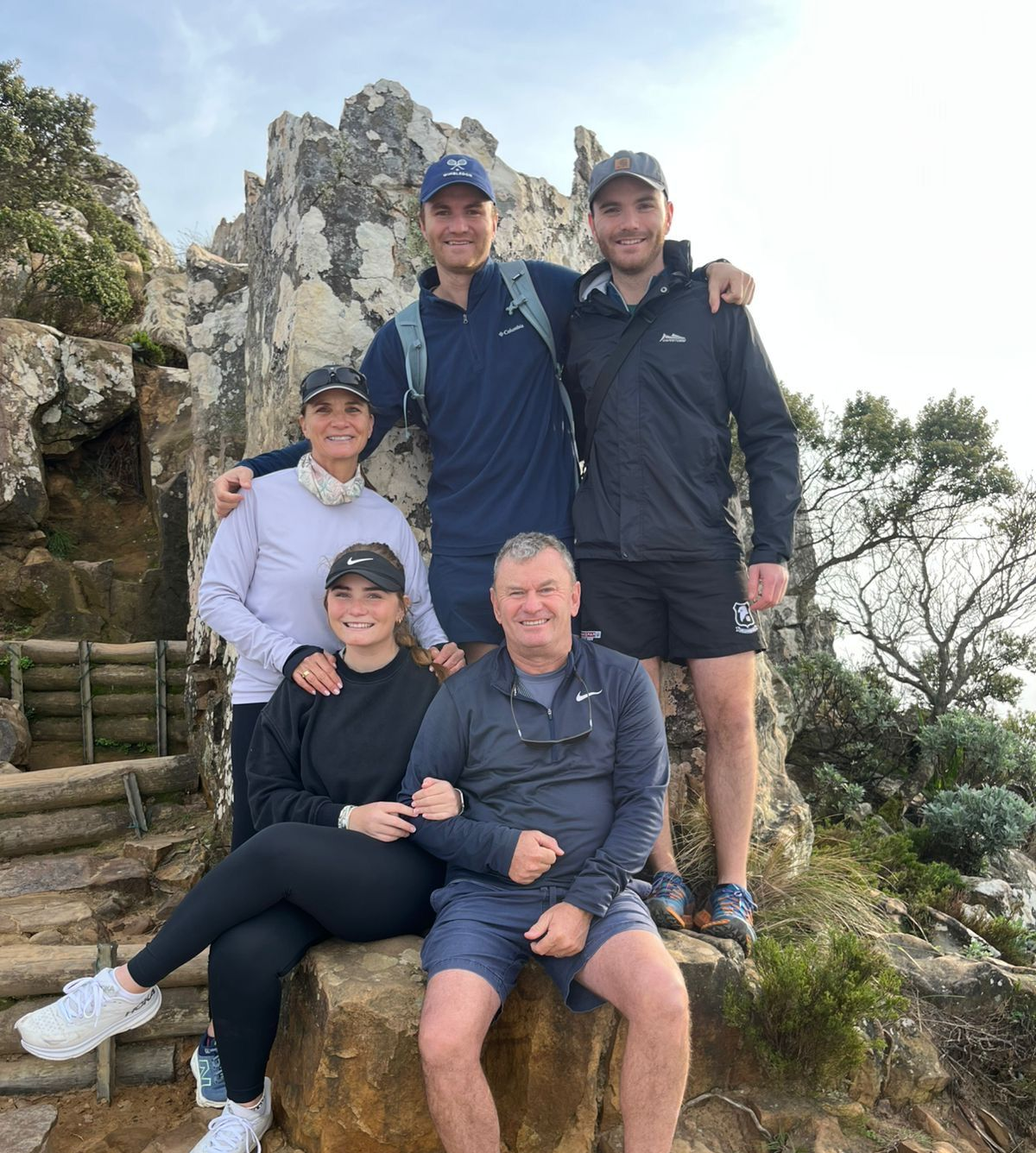
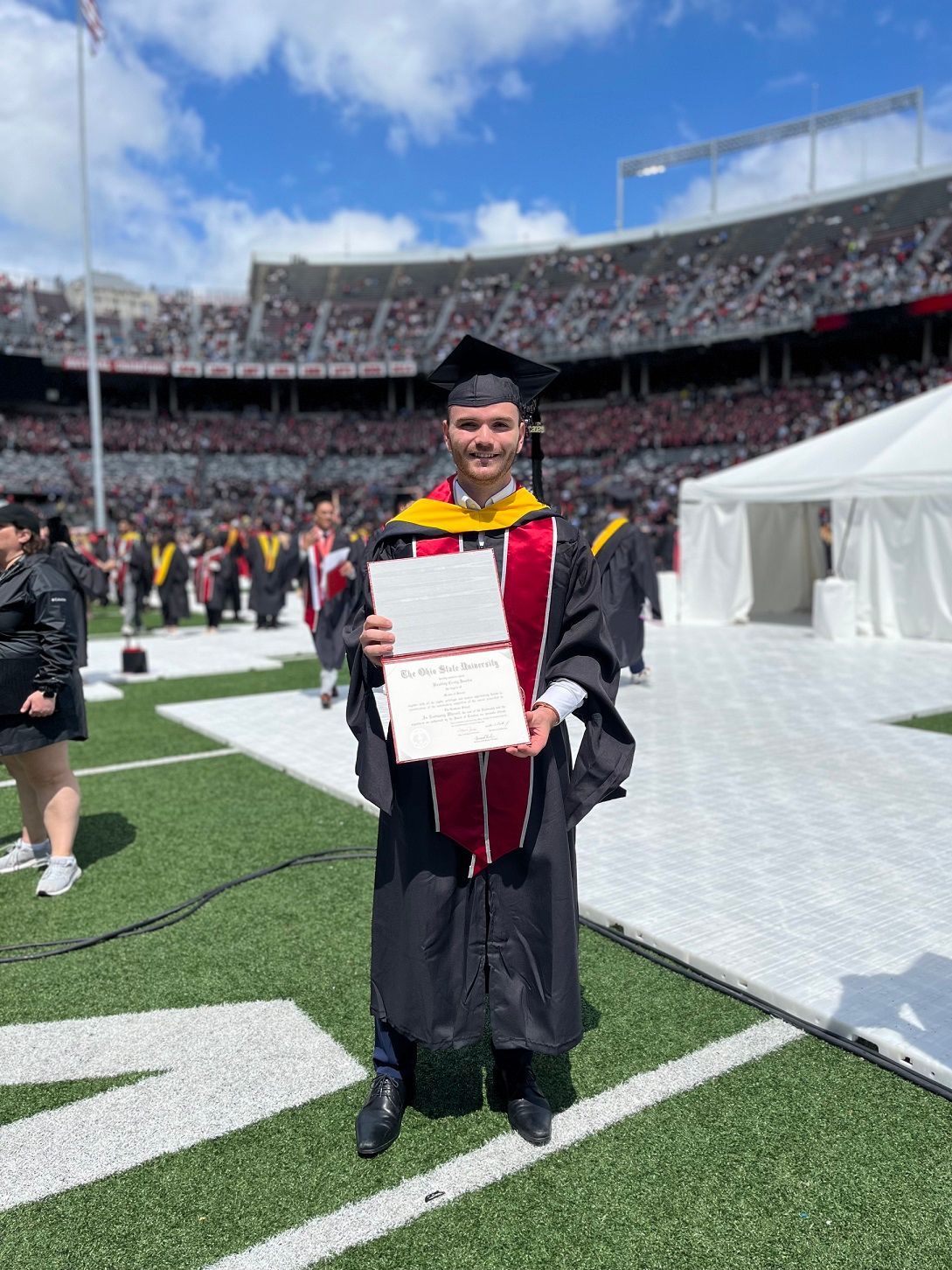
It was a big change. Moving to a new country on my own was daunting at first, but once I settled in, it became an incredible adventure. I worked in a research lab focused on aircraft engines and learnt from some brilliant minds. Outside of academics, I ran the Columbus Marathon, spent weekends hiking, camping, and fishing, and travelled whenever I could.
 

4.     How did you adapt to life in the United States? Any cultural surprises?
Joining university clubs helped me meet new people and settle in quickly. I also tried to embrace American sports culture, though I was surprised by how long an American football match actually lasts! It’s advertised as an hour, but with all the ad breaks, it easily stretches to three. The tailgating culture was also fascinating, people set up TVs and grills in car parks before games. It reminded me of home, just swap rugby and boerewors rolls for football and hot dogs. The cold was another shock, waiting for a bus in, -15°C weather was a real test of endurance!
 

5.     You also travelled quite a bit while studying abroad. Which destinations stood out most?
Nashville, Tennessee
was unforgettable, the home of country music and buzzing with live performances. Chicago also impressed me with its clean, modern feel. I loved taking an architecture boat cruise along the Chicago River and trying their famous deep-dish pizza.
 

6.     Returning to South Africa after two years abroad must have been special. How did it feel to be home again?
It felt incredible. There’s something unique about being surrounded by the warmth and friendliness of South Africans. I missed the braais, local sport chatter, and our easy-going culture. Living abroad really made me appreciate just how vibrant our country is. I’ve even convinced some American friends to come visit!
 

7.     You’ve been working as a mechanical engineer in Cape Town since June. What excites you most about your current role?
I’m working in the aerospace industry, which has always been my dream. Being surrounded by experienced engineers means I’m constantly learning and growing. Every day brings a new challenge, and it’s inspiring to work in a space where innovation literally takes flight.
 

8.     Can you share a project or moment at work that reminds you why you became an engineer?
We design and manufacture unmanned aircraft, and seeing those designs become real, functional machines that actually fly is an incredible feeling. Turning an idea on paper into something that takes to the sky captures exactly why I chose this profession.
 

9.     Thinking back to your Trinityhouse days, what do you think best prepared you for this journey?
Trinityhouse helped me develop a strong work ethic, which has been invaluable both in university and my career. But beyond that, it taught me the importance of balance, the combination of academics, sport, faith, and community. That foundation has guided me through every chapter of my life.
 

10. If you could share one piece of advice with current Trinitonians, what would it be?
Follow your interests, even if they take you down a less-travelled path. Find what makes you curious and chase it. And always make time for your family and friends, everything becomes more meaningful when shared with people you care about.
 

11. What’s next for you, any big goals or dreams on the horizon?
Professionally, I’d love to play a part in strengthening South Africa’s aerospace industry. Personally, I’ve developed a passion for triathlons, so completing a half Ironman is definitely on my radar!
 

12. Quick Fire! Let’s Go!
Tea or Coffee?
Coffee
Early Bird or Night Owl? Early Bird
Dream travel destination? New Zealand, for the fly fishing
Best food you discovered in the USA? Chipotle burritos
Engineering gadget you can’t live without? A trusty pocketknife, always useful
Three words friends would use to describe you? Determined, loyal, generous
What’s always on your playlist? Coming Along by Sunset Sweatshop, “It always gets me amped up!”


Whether he’s testing designs in a lab, running marathons, or helping shape the future of aerospace, Bradley Jacobs continues to exemplify what it means to be a Trinitonian, balanced, driven, and endlessly curious. His story is a reminder that the foundation built at Trinityhouse can propel dreams far beyond the classroom and across the world.


For Bradley, the sky isn’t the limit, it’s just the beginning.


February 21, 2026
Four Pages, One Future: The Trinityhouse Wordsmith Making Her Mark
February 21, 2026
Celebrating multilingual education at Trinityhouse, where identity, inclusion and global readiness grow together. Experts: Samantha Nkosi, Raesetja Ntuli and Maché Piek (Trinityhouse Centurion Teachers) International Mother Language Day, celebrated annually on 21 February, offers schools across South Africa an opportunity to reflect on language inclusion, cultural diversity and identity. At Trinityhouse Schools, language education is not only about academic achievement. It is about building culturally confident, globally aware students who are proud of their roots. In the early years, language shape’s identity. When young children hear Sepedi, isiZulu, Afrikaans or their home language spoken in the classroom, they feel recognised and valued. Introducing home languages in Pre-Primary affirms cultural heritage at a critical stage of development. Children who encounter familiar words, songs and greetings settle more quickly into school life. Multilingual exposure through music, storytelling, indigenous games and augmented reality books strengthens vocabulary and builds early literacy foundations. Students explore the meaning of their names and surnames, deepening pride in their identity. When a child’s mother tongue is acknowledged, confidence grows. Participation increases. Classrooms become spaces where diversity is celebrated naturally. Early language inclusion supports emotional wellbeing and strengthens school readiness, creating confident students from the very beginning. As students’ progress through Preparatory School, continued development of home language skills alongside English strengthens academic performance. Research and classroom experience consistently show that students who maintain strong home language proficiency demonstrate improved comprehension, stronger reading skills and greater conceptual understanding. Teaching strategies such as repetition, guided group reading and small discussion circles allow multilingual students to participate without pressure. Students often explain concepts in Sepedi before bridging into English, reinforcing understanding and building academic confidence. Parents play a pivotal role in this journey. Daily reading in both English and home languages, storytelling and regular conversation strengthen vocabulary and cognitive development. A strong foundation in a home language enhances English acquisition rather than hindering it. Multilingual students develop cognitive flexibility, empathy and adaptability, essential skills in today’s interconnected world. Aligned with South Africa’s 11 official languages and a strong commitment to diversity in education, Trinityhouse continues to broaden its African language offerings. At Trinityhouse Centurion, Sepedi was introduced at Pre-Primary and Preparatory in 2019 and will be extended to Grade 8 in 2027. Offering Sepedi as a First Additional Language affirms students’ linguistic heritage within an academic setting. When students see their home language valued at high school level, it strengthens identity, belonging and pride. At the same time, multilingual students develop cultural awareness and global readiness. The Sepedi department will prepare students for the IEB National Senior Certificate examinations in their matric year. A structured academic pathway, rigorous assessment standards and active collaboration within the IEB Sepedi cluster across Pretoria and Gauteng will ensure consistency and academic excellence. Close cooperation between the Preparatory and High School departments will further support a smooth and well-coordinated implementation in 2027. Adolescence is a critical period of identity formation. Language inclusion directly influences student confidence, wellbeing and belonging. Being able to connect socially through a shared language reduces isolation and fosters community. Through Respect, Diversity and Inclusion initiatives, Public Speaking, assembly celebrations and events such as Heritage Day Fire Feast, Trinityhouse creates spaces where students celebrate linguistic pride through praise poetry, storytelling and song. These moments strengthen engagement, participation and cultural appreciation. International Mother Language Day reminds us that language is more than communication. It is memory, belonging and identity. At Trinityhouse, raising globally competitive students who are proud of their heritage means ensuring that cultural identity and academic excellence walk hand in hand.
February 13, 2026
Engineering her own future: Trinityhouse Alumni Anya Rabbets thrives in stem
February 12, 2026
Celebrating International Day of Women and Girls in Science – 11 February 
February 2, 2026
Hannah Coppin: Styling life one mannequin at a time
January 19, 2026
Hannah Ainsley’s unstoppable journey
January 5, 2026
Mind Over Matter: How Trinityhouse Alumna Lauren Crossman Is Shaping Futures
December 8, 2025
Saiyuri Rampathi – finding her voice, inspiring the next generation
By Laura Barrett October 10, 2025
By Laura Barrett, Intern Counselling Psychologist at Trinityhouse Glenvista Each year on 10 October , the world pauses to recognise World Mental Health Day, a reminder that mental well-being is not just an individual concern, but a shared responsibility among families, schools, and communities. As an Educational Psychologist working closely with children and families, I have seen first-hand how early conversations about mental health can change the course of a young person’s life. When emotional well-being is acknowledged and nurtured from a young age, children are better equipped to handle life’s challenges with confidence and resilience. Why conversations about mental health matter? Mental health is not a “grown-up” topic, it’s a human one. If children are not taught about emotions and coping mechanisms early on, they may grow into adults who struggle to manage stress, relationships, or change. Talking openly about feelings, naming emotions, and learning healthy coping strategies are all part of developing emotional literacy. These are the tools that help children and adults stay grounded through the ups and downs of life. At Trinityhouse, together with the world earlier this year, we explored the WRAP framework: Wellness, Resilience, Action and Purpose, a simple yet powerful approach to supporting children’s mental well-being. Each pillar plays a role in creating emotional stability and balance, not only for children but also for the families guiding them. Wellness begins with the basics. Adequate sleep, good nutrition, hydration, and rest may sound simple, but they lay the foundation for emotional regulation. A well-rested, nourished child is far more likely to cope effectively with daily stressors. Being mindful of mental health also involves small, practical steps like taking a few deep breaths before a stressful test or stretching during homework breaks. For adults, this might mean pausing for a cup of tea, taking a short walk, or simply naming what you’re feeling in the moment. Labelling emotions (“I feel anxious about this meeting”) helps calm the mind and re-engage rational thinking. Resilience isn’t about “always being strong.” It’s about learning to recover and grow after setbacks. Parents and teachers can nurture resilience by giving children space to express their struggles without judgement, then helping them explore possible solutions. When a child faces disappointment, a poor test result or a conflict with a friend, remind them of times they’ve overcome challenges before. Ask: “What helped you last time?” This reflective process empowers children to see themselves as capable problem-solvers, rather than passive victims of circumstance. Positive mental health requires active engagement, not just awareness. For families, this can mean creating calm, structured environments where children feel safe and heard. The Positive Parenting framework offers five helpful practices to support this: Empathy : Validate your child’s emotions instead of dismissing them. “I can see you’re upset about your toy” goes further than “Don’t cry, it’s not a big deal.” Positive Reinforcement : Celebrate effort and progress, no matter how small. A star chart or extra family time can be simple yet powerful motivators. Consistent Boundaries : Predictable routines and clear consequences make children feel secure. Boundaries should be calm, firm, and fair. Open Communication : Create family moments for honest sharing. Ask, “What was the best part of your day?” and really listen to the answer. Co-regulation : Young children often mirror their parents’ emotions. When you model calmness through deep breathing or gentle reassurance you teach them to regulate their own feelings. A sense of purpose is vital for both adults and children. It gives meaning to our actions and connects us to something larger than ourselves. Encourage children to explore hobbies and interests that bring them joy and fulfilment, whether it’s art, sport, volunteering, or spending time outdoors. These pursuits help build identity, confidence, and belonging. For parents, purpose can come from nurturing both their children’s and their own mental health. The saying “You cannot pour from an empty cup” is particularly true here. When parents take care of themselves, physically, mentally, and emotionally, they model balance and self-respect for their children. Recognising when a child is struggling Even with the best support, children can experience emotional challenges. Warning signs may include withdrawal from friends, sudden changes in sleep or appetite, irritability, or declining motivation. These can indicate stress, anxiety, or burnout. If you notice these signs, open a gentle conversation: “I’ve noticed you haven’t seemed yourself lately. Would you like to talk about it?” Sometimes, simply being heard is the first step toward healing. Continuing the conversation The most inspiring shift in recent years is how openly young people now speak about mental health. Many no longer see anxiety, sadness, or stress as weaknesses but as part of the human experience. This honesty offers hope for a more empathetic, emotionally literate generation. On this World Mental Health Day , let’s extend that conversation beyond schools and into our homes. Let’s practise a WRAP culture together by building Wellness, Resilience, Action and Purpose not only in our children’s lives but in our own. At Trinityhouse , we believe education extends beyond academics, it’s about nurturing the heart and mind. By fostering open dialogue, emotional awareness, and resilience, we aim to create an environment where every child feels seen, supported, and empowered to thrive. When families make mental health a daily priority, we don’t just raise stronger children, we raise a kinder, calmer and more connected generation.
Studentsi
September 10, 2025
One of the most significant academic decisions your child will make in their school career is which subjects to select. For many South African families, it can feel like a daunting task filled with pressure, uncertainty, and long-term consequences. But with the right support, tools, and guidance, parents can help their children make well-informed decisions that set them up for future success, both academically and professionally. The foundation of good subject choices lies in understanding your child’s academic ability and current performance. Subjects like Mathematics, Physical Sciences, and Accounting require solid results in Grade 9 and a strong grasp of key concepts. Similarly, subjects like Engineering Graphics & Design (EGD) or Visual Arts cater to students with practical and creative aptitudes. Consider your child’s learning style: do they prefer theory, or do they thrive with hands-on learning? Although, it is normal to want what’s best for your child’s future, you should not force them to live up to your ideal of success. Rather initiate conversations about possible careers or areas of interest and explore how different subjects align with those pathways. Platforms like YENZA Careers are incredibly helpful in this regard. YENZA uses psychometric assessments to offer realistic subject recommendations based on your child’s strengths, interests, and potential career matches, and it gives parents access to the results too. “Choosing the right subjects is a balance of academic ability, interest, and long-term thinking,” says Sumari Purdon , Head of Academics for Trinityhouse Schools. “We encourage families to use this opportunity to start meaningful conversations about the future, with support from tools like YENZA and input from educators who know the student well.”