Online Learning During COVID-19 With Trinityhouse
ADvTECH Group • April 24, 2020
Trinityhouse’s Online Learning Resources During COVID-19

The resulting changes and challenges of the COVID-19 pandemic have been felt around the world.
Perhaps one of the biggest changes has been experienced within the educational sector. As a result of lockdown safety measures, teachers, parents and students alike have had to become part of innovative new ways to teach and learn.
At Trinityhouse we’re committed to helping your child get the best education possible during these unprecedented times.
Navigating The New World Of Online Learning
We are fortunate to live in a time where online learning resources are readily available and largely accessible. As teachers, we’re also sensitive to the challenges a parent may be facing when trying to school their child for the first time. Often this is an unexpectedly tricky role for a parent to navigate alongside all their other roles and responsibilities.
Here are some helpful tips for parents that are currently homeschooling their children, from our Trinityhouse teachers:
● Limit distractions
during “school hours”. These include mobiles, tablets, TVs and gaming stations.
● Set up a dedicated workspace. Try to make it a comfortable and quiet space that can help your child focus.
● Maintain regular breaks such as snack time.
● Allow your child to socialise after lessons through online video chats with friends or games. An important part of school is peer interaction and social development.
● Mix screen learning with more traditional educational mediums such as mind maps, handwritten notes, white boards or memory cards. Younger children can be encouraged to draw or create project posters.
● Keep in touch with other parents in your child’s class. They are in this with you and could become a great source of mutual support and encouragement.
● Set up a schedule and stick to it. Routine is important during this time as your child could easily mistake lockdown as holiday period.
Trinityhouse are currently working with ADvTech Schools to preserve teaching and learning during lockdown. These digital classrooms make use of an application called MSTeams
and all parents have been provided with logins and class schedules. Online learning is available for grades 000 through to 12. Our staff are dedicated to improving the virtual teaching experience each week.
We would like to take this opportunity to commend all parents on their tremendous efforts to homeschool their children during this period. Together, we will navigate any new challenges that come our way without compromising your child’s education and future.

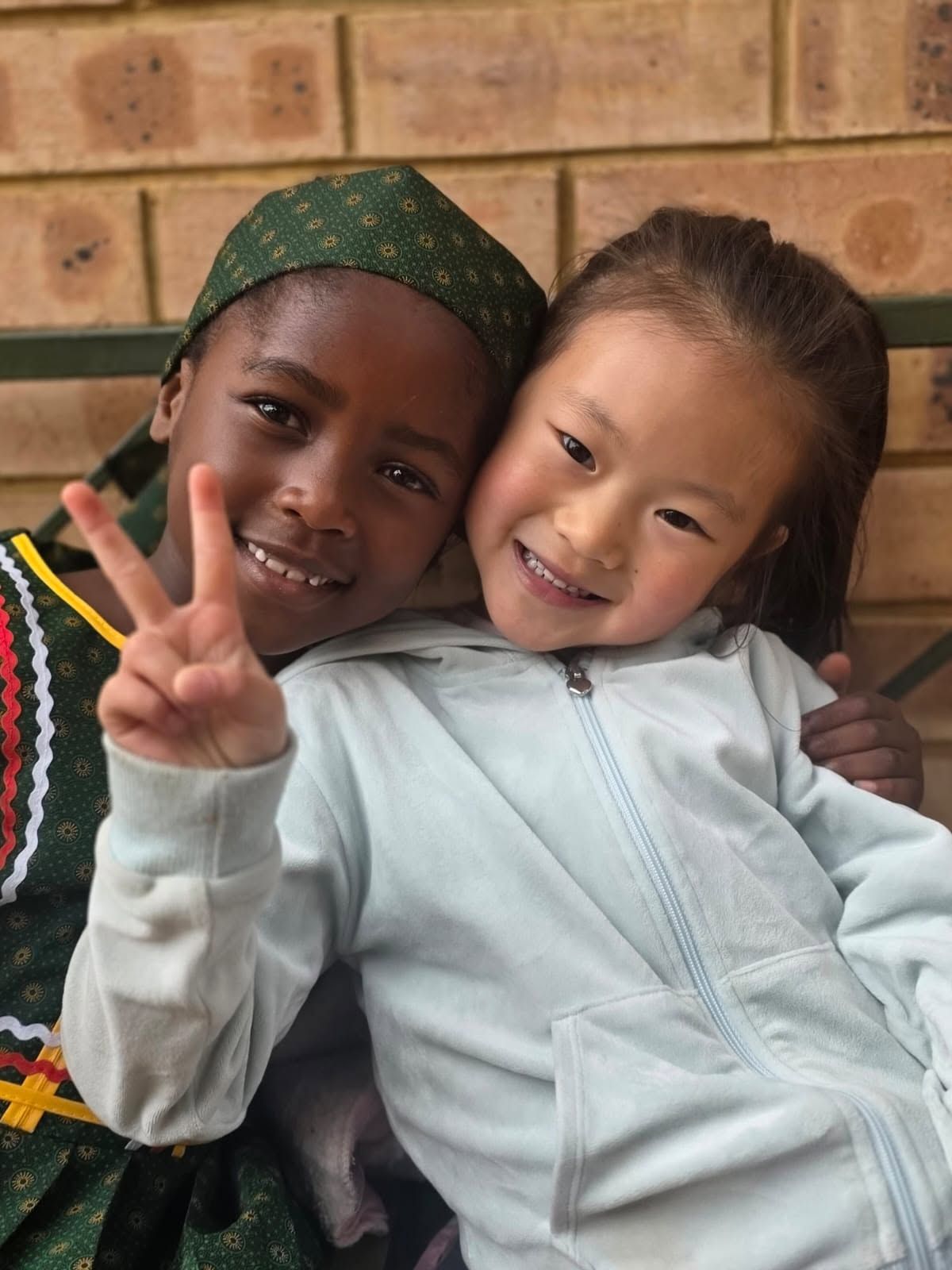
Celebrating multilingual education at Trinityhouse, where identity, inclusion and global readiness grow together. Experts: Samantha Nkosi, Raesetja Ntuli and Maché Piek (Trinityhouse Centurion Teachers) International Mother Language Day, celebrated annually on 21 February, offers schools across South Africa an opportunity to reflect on language inclusion, cultural diversity and identity. At Trinityhouse Schools, language education is not only about academic achievement. It is about building culturally confident, globally aware students who are proud of their roots. In the early years, language shape’s identity. When young children hear Sepedi, isiZulu, Afrikaans or their home language spoken in the classroom, they feel recognised and valued. Introducing home languages in Pre-Primary affirms cultural heritage at a critical stage of development. Children who encounter familiar words, songs and greetings settle more quickly into school life. Multilingual exposure through music, storytelling, indigenous games and augmented reality books strengthens vocabulary and builds early literacy foundations. Students explore the meaning of their names and surnames, deepening pride in their identity. When a child’s mother tongue is acknowledged, confidence grows. Participation increases. Classrooms become spaces where diversity is celebrated naturally. Early language inclusion supports emotional wellbeing and strengthens school readiness, creating confident students from the very beginning. As students’ progress through Preparatory School, continued development of home language skills alongside English strengthens academic performance. Research and classroom experience consistently show that students who maintain strong home language proficiency demonstrate improved comprehension, stronger reading skills and greater conceptual understanding. Teaching strategies such as repetition, guided group reading and small discussion circles allow multilingual students to participate without pressure. Students often explain concepts in Sepedi before bridging into English, reinforcing understanding and building academic confidence. Parents play a pivotal role in this journey. Daily reading in both English and home languages, storytelling and regular conversation strengthen vocabulary and cognitive development. A strong foundation in a home language enhances English acquisition rather than hindering it. Multilingual students develop cognitive flexibility, empathy and adaptability, essential skills in today’s interconnected world. Aligned with South Africa’s 11 official languages and a strong commitment to diversity in education, Trinityhouse continues to broaden its African language offerings. At Trinityhouse Centurion, Sepedi was introduced at Pre-Primary and Preparatory in 2019 and will be extended to Grade 8 in 2027. Offering Sepedi as a First Additional Language affirms students’ linguistic heritage within an academic setting. When students see their home language valued at high school level, it strengthens identity, belonging and pride. At the same time, multilingual students develop cultural awareness and global readiness. The Sepedi department will prepare students for the IEB National Senior Certificate examinations in their matric year. A structured academic pathway, rigorous assessment standards and active collaboration within the IEB Sepedi cluster across Pretoria and Gauteng will ensure consistency and academic excellence. Close cooperation between the Preparatory and High School departments will further support a smooth and well-coordinated implementation in 2027. Adolescence is a critical period of identity formation. Language inclusion directly influences student confidence, wellbeing and belonging. Being able to connect socially through a shared language reduces isolation and fosters community. Through Respect, Diversity and Inclusion initiatives, Public Speaking, assembly celebrations and events such as Heritage Day Fire Feast, Trinityhouse creates spaces where students celebrate linguistic pride through praise poetry, storytelling and song. These moments strengthen engagement, participation and cultural appreciation. International Mother Language Day reminds us that language is more than communication. It is memory, belonging and identity. At Trinityhouse, raising globally competitive students who are proud of their heritage means ensuring that cultural identity and academic excellence walk hand in hand.

By Laura Barrett, Intern Counselling Psychologist at Trinityhouse Glenvista Each year on 10 October , the world pauses to recognise World Mental Health Day, a reminder that mental well-being is not just an individual concern, but a shared responsibility among families, schools, and communities. As an Educational Psychologist working closely with children and families, I have seen first-hand how early conversations about mental health can change the course of a young person’s life. When emotional well-being is acknowledged and nurtured from a young age, children are better equipped to handle life’s challenges with confidence and resilience. Why conversations about mental health matter? Mental health is not a “grown-up” topic, it’s a human one. If children are not taught about emotions and coping mechanisms early on, they may grow into adults who struggle to manage stress, relationships, or change. Talking openly about feelings, naming emotions, and learning healthy coping strategies are all part of developing emotional literacy. These are the tools that help children and adults stay grounded through the ups and downs of life. At Trinityhouse, together with the world earlier this year, we explored the WRAP framework: Wellness, Resilience, Action and Purpose, a simple yet powerful approach to supporting children’s mental well-being. Each pillar plays a role in creating emotional stability and balance, not only for children but also for the families guiding them. Wellness begins with the basics. Adequate sleep, good nutrition, hydration, and rest may sound simple, but they lay the foundation for emotional regulation. A well-rested, nourished child is far more likely to cope effectively with daily stressors. Being mindful of mental health also involves small, practical steps like taking a few deep breaths before a stressful test or stretching during homework breaks. For adults, this might mean pausing for a cup of tea, taking a short walk, or simply naming what you’re feeling in the moment. Labelling emotions (“I feel anxious about this meeting”) helps calm the mind and re-engage rational thinking. Resilience isn’t about “always being strong.” It’s about learning to recover and grow after setbacks. Parents and teachers can nurture resilience by giving children space to express their struggles without judgement, then helping them explore possible solutions. When a child faces disappointment, a poor test result or a conflict with a friend, remind them of times they’ve overcome challenges before. Ask: “What helped you last time?” This reflective process empowers children to see themselves as capable problem-solvers, rather than passive victims of circumstance. Positive mental health requires active engagement, not just awareness. For families, this can mean creating calm, structured environments where children feel safe and heard. The Positive Parenting framework offers five helpful practices to support this: Empathy : Validate your child’s emotions instead of dismissing them. “I can see you’re upset about your toy” goes further than “Don’t cry, it’s not a big deal.” Positive Reinforcement : Celebrate effort and progress, no matter how small. A star chart or extra family time can be simple yet powerful motivators. Consistent Boundaries : Predictable routines and clear consequences make children feel secure. Boundaries should be calm, firm, and fair. Open Communication : Create family moments for honest sharing. Ask, “What was the best part of your day?” and really listen to the answer. Co-regulation : Young children often mirror their parents’ emotions. When you model calmness through deep breathing or gentle reassurance you teach them to regulate their own feelings. A sense of purpose is vital for both adults and children. It gives meaning to our actions and connects us to something larger than ourselves. Encourage children to explore hobbies and interests that bring them joy and fulfilment, whether it’s art, sport, volunteering, or spending time outdoors. These pursuits help build identity, confidence, and belonging. For parents, purpose can come from nurturing both their children’s and their own mental health. The saying “You cannot pour from an empty cup” is particularly true here. When parents take care of themselves, physically, mentally, and emotionally, they model balance and self-respect for their children. Recognising when a child is struggling Even with the best support, children can experience emotional challenges. Warning signs may include withdrawal from friends, sudden changes in sleep or appetite, irritability, or declining motivation. These can indicate stress, anxiety, or burnout. If you notice these signs, open a gentle conversation: “I’ve noticed you haven’t seemed yourself lately. Would you like to talk about it?” Sometimes, simply being heard is the first step toward healing. Continuing the conversation The most inspiring shift in recent years is how openly young people now speak about mental health. Many no longer see anxiety, sadness, or stress as weaknesses but as part of the human experience. This honesty offers hope for a more empathetic, emotionally literate generation. On this World Mental Health Day , let’s extend that conversation beyond schools and into our homes. Let’s practise a WRAP culture together by building Wellness, Resilience, Action and Purpose not only in our children’s lives but in our own. At Trinityhouse , we believe education extends beyond academics, it’s about nurturing the heart and mind. By fostering open dialogue, emotional awareness, and resilience, we aim to create an environment where every child feels seen, supported, and empowered to thrive. When families make mental health a daily priority, we don’t just raise stronger children, we raise a kinder, calmer and more connected generation.