Things to think about when choosing a Pre-Primary for your child 
Barbara Eaton (Academic Development Coordinator of ADvTECH Pre-Primary Schools) • May 24, 2019
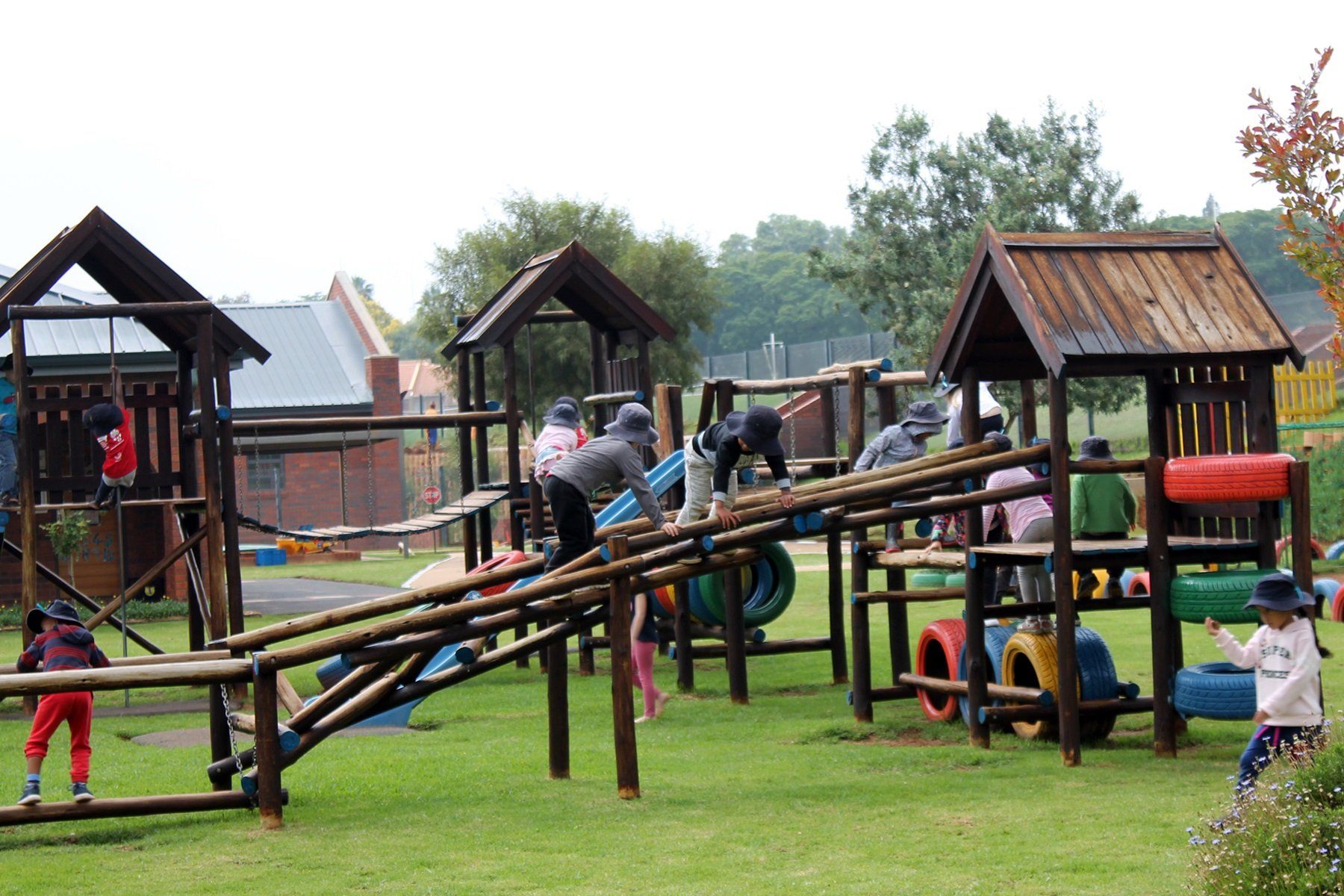
Kids playing on a play ground

Choosing a school for your little one should not be a last minute, hasty decision. Start looking at least three months before you need to enter your child, if you are looking to place a baby. If you want your child to join a good school when they turn three, you should start looking at birth. This may seem ludicrous but the top Pre-Primary schools have waiting lists several years long!

The first decision is whether to place your child in a school near home or near your place of work. Small children suffer from many little illnesses and most schools want a sick child to go home as soon as possible. Choose a school that is close enough for someone to fetch them promptly if they fall ill. No matter how loving the care at school, a sick child just wants the comfort of home.

Choose a school whose hours suit your schedule. If the school closes at 5.30pm, you must be able to reach it with time to spare, regardless of the traffic. Does the school open early enough for you to get to work? You cannot leave a small child outside the gate and assume that someone will take responsibility!

There are so many places of care to choose from at the moment that you may be bewildered by the choice. Take the time to visit the school unannounced. Check the security first, it should not be possible for you just to drive in. Are there cameras at the door and an entrance procedure? Next, how are you greeted and dealt with by the receptionist? This should be efficient, friendly and with an offer to show you the school, either then or by appointment. An appointment does not mean they have anything to hide; good schools have to allocate time and staff to deal with parents effectively. Is the reception clutter free and efficiently run? Are the admittance forms neatly printed and requesting sufficient background detail on your child?

When you look around, watch the children. Under-fives should be playing freely and busily with clean, unbroken toys that are well displayed to enable choice, or engaged in activities that are stimulating creativity or enhancing number or literacy skills. There should be no worksheets or cloned art work. Is the classroom clean and attractive, with good natural light and ventilation? Is there sufficient space for the children? Crowded rooms lead to fights and stress. Has the teacher (who should be SACE registered) an assistant to manage bathroom visits, messes and to support play? Is there evidence of an overall theme that the children are investigating? Are there good quality books in a comfy spot for reading? Are the carpets and floors clean? Beware of schools that are too tidy and immaculate as this could mean that the equipment is for display, not the children’s use. Children should be aware of your presence but not clamouring for your attention.

What is your language policy for your child? If they are to attend Primary school in a specific language, they will be at an advantage if their early years are spent in the same language. This does not mean that you should forsake your home language. Bi-lingual children have a cognitive advantage, but do not confuse your child by subjecting him/her to a constant mixture of languages. Choose a school that will help your child enter grade 1 with a strong vocabulary and comprehension, as well as an ability to engage in their intellectual education with understanding.

What do you require in the way of meals? Not all schools serve breakfast, lunch and snacks and the price should reflect what is provided. Check out the kitchen, the kitchen staff and the certificates from the local authority indicating that the school is licenced to provide meals. Look at the menus. Is there sufficient variety and fresh fruit and vegetables? Ask about who feeds the little ones and how meals are conducted for the older ones. Are the children forced to eat their meals? Can the school cater for genuine allergies, (Not fussy eaters!)

If your child is still a baby, check the policies on formulas, nappies, wet wipes etc. If the school supplies everything, it may be a little more expensive but well worth your while in terms of convenience. Look at the nappy changing areas, where everything should be neatly labelled and the area safe and well ventilated, with proper disposal facilities. Potty training areas should be bright and welcoming, with small toilets for children aged two plus.

Are the baby rooms warm enough for the babies to play and crawl on the floor and not be kept in a cot all day. Who provides the cot linen and how often is it washed? There should be a nursing sister available for very young babies, as well as well-trained carers who will talk to and stimulate your child.

The outdoor area should have grass, sand, water, shade and wheeled toys, as well as safe climbing and swinging equipment, appropriate for the different age groups. Children are stimulated by their environment so the garden should be attractive, bright and well supervised. Gross motor development underlies all other development at this age so there should be a minimum of an hour per morning and afternoon set aside for active, outdoor play.

Last but not least, the atmosphere of the school should be welcoming and child friendly. Do not be swayed by the latest technological devices and lessons if the staff seem aloof and uncaring. With proper research your child should be happy and well stimulated in the chosen environment until it is time for Big School.


June 5, 2026
Engineering Speed, Grit and Global Adventure: Meet Trinityhouse Alumnus Matthew Thersby
May 29, 2026
Creative Courage, Big Dreams and Space Kid Adventures
By Franco van Dyk, Deputy Principal of Trinityhouse Preparatory Centurion May 18, 2026
Winning a match may earn applause in the moment, but the lessons learnt through sport often last a lifetime. Every training session, team talk, victory and defeat presents students with opportunities to develop resilience, discipline, leadership and integrity in ways few other environments can offer. As schools around the world mark World Fair Play Day on 19 May 2026, conversations around sport are shifting beyond trophies and results towards the deeper role athletics play in shaping character and preparing students for life beyond the classroom. Sport places students in environments where responsibility constantly changes. One moment may require leadership and confidence, while another demands humility, support and teamwork. These experiences encourage students to understand that success is rarely achieved alone. According to Trinityhouse Preparatory Centurion Deputy Principal Franco van Dyk, sport provides one of the most practical platforms for character development. “Sport challenges students to lead, support, adapt and persevere in real-time situations. Character is often revealed during moments of pressure, disappointment or uncertainty. Those experiences help shape young people into resilient and responsible individuals,” says van Dyk. Participation in sport also teaches accountability. Students quickly learn that preparation, commitment and consistency influence outcomes. Team environments reinforce the understanding that every individual contribution matters and that collective success depends on shared effort and responsibility. Healthy sporting cultures are equally dependent on respect. Respect towards teammates, opponents, teachers, coaches and the school itself create environments where students feel connected to something greater than themselves. Pride in representing a school badge often strengthens responsibility, discipline and unity. Good sportsmanship becomes especially important during difficult moments. Victory may reveal confidence but defeat often reveals character. Students learn how to recover after setbacks, reflect on performance and continue striving towards improvement despite disappointment. “Fair play is about much more than following rules,” explains van Dyk. “Students learn that integrity matters even when nobody is watching. Ethical behaviour, honesty and respect become habits that influence the way they lead and interact later in life.” Sport also provides valuable opportunities for students to develop emotional maturity. Pressure situations, competition and conflict require young people to manage emotions constructively while learning how to communicate effectively and make decisions under stress.  Leadership within sport extends beyond captains and top performers. Students who encourage teammates, demonstrate discipline and show empathy often influence team culture just as powerfully. Younger students naturally observe these behaviours and begin adopting similar values themselves. Humility remains another important lesson developed through sport. Success can easily create complacency, yet grounded individuals continue learning, improving and respecting others regardless of results. Students begin to understand that personal growth matters more than status or recognition. Inclusive sporting environments also play a vital role in student development. Equal opportunities encourage participation, confidence and belonging while strengthening school communities. Students exposed to diverse personalities, strengths and perspectives develop empathy and mutual respect through shared experiences. Schools therefore carry an important responsibility to ensure sport remains grounded in values and fair play rather than purely results-driven competition. Recognition of effort, resilience, teamwork and improvement helps students understand that conduct and character carry greater long-term value than short-term victories. “Sport prepares students for life far beyond school,” adds van Dyk. “Resilience, discipline, teamwork, humility and integrity remain essential qualities in adulthood. Lessons developed on the sports field often become the foundation for future leadership and success.” As conversations around education continue evolving, sport remains one of the most powerful classrooms for teaching students how to lead ethically, support others respectfully and approach life with courage and integrity.
May 15, 2026
International Families Day reminds us that students thrive when schools and families walk the journey together
By Laura Barrett March 20, 2026
Where emotional intelligence, belonging and wellbeing shape confident, high-achieving students
By Camilla Pretorius March 14, 2026
Each year on 14 March, schools across the globe celebrate Pi Day, a playful tribute to the mathematical constant π (3.14). Numbers may seem abstract at first glance, yet behind every formula lies a story of discovery, logic and imagination. Mathematical thinking shapes the way young people analyse the world, solve problems and innovate in fields ranging from medicine to technology. Passion for mathematics rarely appears overnight. Curiosity often provides the starting point. According to Camilla Pretorius, Principal of Trinityhouse Centurion , mathematical confidence develops when students realise that the subject is not about memorising formulas but about exploring patterns and ideas. “Mathematics is fundamentally about curiosity,” Pretorius explains. “Students begin to thrive when they understand that problem-solving is a journey rather than a test of instant ability.” Early childhood plays a critical role in shaping attitudes towards numbers. Young students naturally explore patterns, shapes and quantities through play long before formal lessons begin. Counting steps on a staircase, sorting colourful objects or building towers all introduce foundational mathematical concepts. Teachers who encourage exploration help students associate mathematics with discovery rather than anxiety. Games, puzzles and open-ended questions transform classrooms into spaces where curiosity flourishes. Confidence grows when mistakes become part of learning. “Students sometimes arrive believing they are ‘not maths people’,” Pretorius says. “Changing that mindset requires patience and encouragement. Progress becomes visible once students understand that effort and persistence build mathematical ability.” Academic performance improves when students believe they can succeed. Mathematical confidence determines whether a student will attempt a challenging problem or avoid it entirely. Supportive classroom environments allow students to ask questions, test ideas and learn through trial and error. Teachers play a central role in shaping that environment. Encouraging discussion, celebrating creative thinking and analysing mistakes openly helps students develop resilience. 
February 21, 2026
Four Pages, One Future: The Trinityhouse Wordsmith Making Her Mark
February 21, 2026
Celebrating multilingual education at Trinityhouse, where identity, inclusion and global readiness grow together. Experts: Samantha Nkosi, Raesetja Ntuli and Maché Piek (Trinityhouse Centurion Teachers) International Mother Language Day, celebrated annually on 21 February, offers schools across South Africa an opportunity to reflect on language inclusion, cultural diversity and identity. At Trinityhouse Schools, language education is not only about academic achievement. It is about building culturally confident, globally aware students who are proud of their roots. In the early years, language shape’s identity. When young children hear Sepedi, isiZulu, Afrikaans or their home language spoken in the classroom, they feel recognised and valued. Introducing home languages in Pre-Primary affirms cultural heritage at a critical stage of development. Children who encounter familiar words, songs and greetings settle more quickly into school life. Multilingual exposure through music, storytelling, indigenous games and augmented reality books strengthens vocabulary and builds early literacy foundations. Students explore the meaning of their names and surnames, deepening pride in their identity. When a child’s mother tongue is acknowledged, confidence grows. Participation increases. Classrooms become spaces where diversity is celebrated naturally. Early language inclusion supports emotional wellbeing and strengthens school readiness, creating confident students from the very beginning. As students’ progress through Preparatory School, continued development of home language skills alongside English strengthens academic performance. Research and classroom experience consistently show that students who maintain strong home language proficiency demonstrate improved comprehension, stronger reading skills and greater conceptual understanding. Teaching strategies such as repetition, guided group reading and small discussion circles allow multilingual students to participate without pressure. Students often explain concepts in Sepedi before bridging into English, reinforcing understanding and building academic confidence. Parents play a pivotal role in this journey. Daily reading in both English and home languages, storytelling and regular conversation strengthen vocabulary and cognitive development. A strong foundation in a home language enhances English acquisition rather than hindering it. Multilingual students develop cognitive flexibility, empathy and adaptability, essential skills in today’s interconnected world. Aligned with South Africa’s 11 official languages and a strong commitment to diversity in education, Trinityhouse continues to broaden its African language offerings. At Trinityhouse Centurion, Sepedi was introduced at Pre-Primary and Preparatory in 2019 and will be extended to Grade 8 in 2027. Offering Sepedi as a First Additional Language affirms students’ linguistic heritage within an academic setting. When students see their home language valued at high school level, it strengthens identity, belonging and pride. At the same time, multilingual students develop cultural awareness and global readiness. The Sepedi department will prepare students for the IEB National Senior Certificate examinations in their matric year. A structured academic pathway, rigorous assessment standards and active collaboration within the IEB Sepedi cluster across Pretoria and Gauteng will ensure consistency and academic excellence. Close cooperation between the Preparatory and High School departments will further support a smooth and well-coordinated implementation in 2027. Adolescence is a critical period of identity formation. Language inclusion directly influences student confidence, wellbeing and belonging. Being able to connect socially through a shared language reduces isolation and fosters community. Through Respect, Diversity and Inclusion initiatives, Public Speaking, assembly celebrations and events such as Heritage Day Fire Feast, Trinityhouse creates spaces where students celebrate linguistic pride through praise poetry, storytelling and song. These moments strengthen engagement, participation and cultural appreciation. International Mother Language Day reminds us that language is more than communication. It is memory, belonging and identity. At Trinityhouse, raising globally competitive students who are proud of their heritage means ensuring that cultural identity and academic excellence walk hand in hand.
February 13, 2026
Engineering her own future: Trinityhouse Alumni Anya Rabbets thrives in stem
February 12, 2026
Celebrating International Day of Women and Girls in Science – 11 February