Dark Spaces of the Internet: Cyberbullying During Lockdown

ADvTECH Group • June 8, 2020

a sad girl in the dark looking at her phone

How to Handle Cyberbullying During Lockdown

“Cyber bullies can hide behind a mask of anonymity online, and do not need direct physical access to their victims to do unimaginable harm.” – Anna Marcia Chavez 

With lockdown still a reality, students have been turning to the Internet to stay connected. As useful as the Internet is, not all children are aware of the dangers that the digital world imposes. What happens when innocent gestures like sharing one’s contact details leads to a traumatic case of cyberbullying? How can you help your child maintain an online social distance from cyber bullies? We’re here to guide you through it. 

What Is Cyberbullying?

Cyberbullying is bullying that takes place online. Even though it can’t be physical violence, it can be detrimental to one’s mental health. Cyberbullying can easily occur on digital platforms through social media apps, texts and online gaming platforms. 

Cyberbullying includes:

• Sending cruel, harsh or humiliating messages to someone.
• Forwarding embarrassing videos or photos to people.
• Sending unwanted sexual messages or images to people.
• Making abusive comments about someone. This includes homophobic, racist, transphobic or sexist remarks. 

How Can I Help My Child If They're Experiencing Cyberbullying? 

Cyberbullying can be difficult to control, but with the right steps it can be tackled. If you become aware that your child is being cyberbullied, follow these four steps to help them deal with the problem.

1. Talk To Them And Listen To What They Have To Say

It’s important to remember not to patronise your child. Instead, make them feel as if the power is in their hands and that you’re there to support them every step of the way.

2.Collect Evidence And Access The Situation

Once your child shares their cyberbullying experience, it’s time to assess the situation and collect evidence. Keeping a record of all interactions with the perpetrator is vital. Be vigilant from the beginning. Ask your child to screenshot anything offensive. This will be your evidence when reporting cyberbullying cases to site administrators, teachers, principals and to the police.

3. Report And Block

Enough is enough. Immediately block the perpetrator and then report them to site administrators. Site administrators are there to help support and protect people from online abuse.

If the cyberbully goes to the same school as your child, then be sure to report the case to your child’s teacher and principle. 
 
4. Make Sure They Feel Safe

Be sure to protect your child’s online presence. Ensuring that your child’s social media platforms have a high privacy setting is a priority. This will help keep your child in control of who they’re talking to and who has access to view their social profiles. 

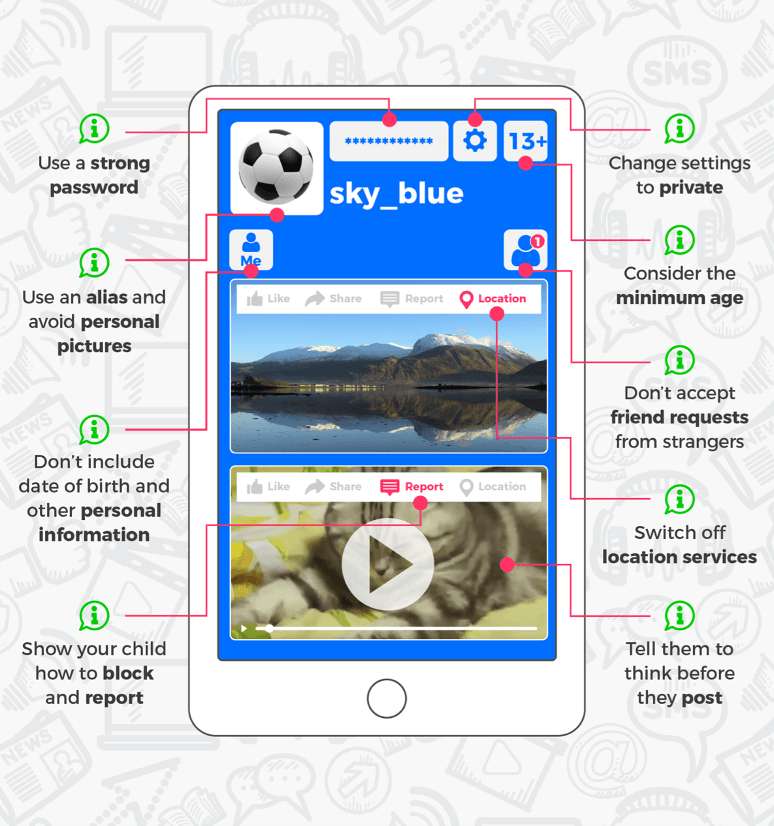
It’s important to keep in mind that whilst the internet imposes a dark side, there are ways to avoid it. Here are some pro tips on how you can help protect your child on social media. Follow this social media profile example to ensure that your child’s online presence is protected. 
a sad girl in the dark looking at her phone

Standing side by side with your child during a traumatic experience such as cyberbullying will help make them feel safer. It will also allow them to have the courage to speak up about other issues that they may face. Together, you can take on and overcome any challenge. 
Remember: “Being challenged in life is inevitable, but being defeated is optional” Roger Crawford.
July 20, 2026
International Chess Day highlights how Trinityhouse and Mzansi Chess Academy are helping students develop the thinking, resilience and leadership skills needed for tomorrow's world.
July 1, 2026
A new chapter will strengthen Christian values, academic excellence and opportunities for generations of students

June 11, 2026
Why play remains one of the most powerful tools in shaping confident, capable and compassionate adults
June 5, 2026
Engineering Speed, Grit and Global Adventure: Meet Trinityhouse Alumnus Matthew Thersby
May 29, 2026
Creative Courage, Big Dreams and Space Kid Adventures
By Franco van Dyk, Deputy Principal of Trinityhouse Preparatory Centurion May 18, 2026
Winning a match may earn applause in the moment, but the lessons learnt through sport often last a lifetime. Every training session, team talk, victory and defeat presents students with opportunities to develop resilience, discipline, leadership and integrity in ways few other environments can offer. As schools around the world mark World Fair Play Day on 19 May 2026, conversations around sport are shifting beyond trophies and results towards the deeper role athletics play in shaping character and preparing students for life beyond the classroom. Sport places students in environments where responsibility constantly changes. One moment may require leadership and confidence, while another demands humility, support and teamwork. These experiences encourage students to understand that success is rarely achieved alone. According to Trinityhouse Preparatory Centurion Deputy Principal Franco van Dyk, sport provides one of the most practical platforms for character development. “Sport challenges students to lead, support, adapt and persevere in real-time situations. Character is often revealed during moments of pressure, disappointment or uncertainty. Those experiences help shape young people into resilient and responsible individuals,” says van Dyk. Participation in sport also teaches accountability. Students quickly learn that preparation, commitment and consistency influence outcomes. Team environments reinforce the understanding that every individual contribution matters and that collective success depends on shared effort and responsibility. Healthy sporting cultures are equally dependent on respect. Respect towards teammates, opponents, teachers, coaches and the school itself create environments where students feel connected to something greater than themselves. Pride in representing a school badge often strengthens responsibility, discipline and unity. Good sportsmanship becomes especially important during difficult moments. Victory may reveal confidence but defeat often reveals character. Students learn how to recover after setbacks, reflect on performance and continue striving towards improvement despite disappointment. “Fair play is about much more than following rules,” explains van Dyk. “Students learn that integrity matters even when nobody is watching. Ethical behaviour, honesty and respect become habits that influence the way they lead and interact later in life.” Sport also provides valuable opportunities for students to develop emotional maturity. Pressure situations, competition and conflict require young people to manage emotions constructively while learning how to communicate effectively and make decisions under stress.  Leadership within sport extends beyond captains and top performers. Students who encourage teammates, demonstrate discipline and show empathy often influence team culture just as powerfully. Younger students naturally observe these behaviours and begin adopting similar values themselves. Humility remains another important lesson developed through sport. Success can easily create complacency, yet grounded individuals continue learning, improving and respecting others regardless of results. Students begin to understand that personal growth matters more than status or recognition. Inclusive sporting environments also play a vital role in student development. Equal opportunities encourage participation, confidence and belonging while strengthening school communities. Students exposed to diverse personalities, strengths and perspectives develop empathy and mutual respect through shared experiences. Schools therefore carry an important responsibility to ensure sport remains grounded in values and fair play rather than purely results-driven competition. Recognition of effort, resilience, teamwork and improvement helps students understand that conduct and character carry greater long-term value than short-term victories. “Sport prepares students for life far beyond school,” adds van Dyk. “Resilience, discipline, teamwork, humility and integrity remain essential qualities in adulthood. Lessons developed on the sports field often become the foundation for future leadership and success.” As conversations around education continue evolving, sport remains one of the most powerful classrooms for teaching students how to lead ethically, support others respectfully and approach life with courage and integrity.
May 15, 2026
International Families Day reminds us that students thrive when schools and families walk the journey together
By Laura Barrett March 20, 2026
Where emotional intelligence, belonging and wellbeing shape confident, high-achieving students
By Camilla Pretorius March 14, 2026
Each year on 14 March, schools across the globe celebrate Pi Day, a playful tribute to the mathematical constant π (3.14). Numbers may seem abstract at first glance, yet behind every formula lies a story of discovery, logic and imagination. Mathematical thinking shapes the way young people analyse the world, solve problems and innovate in fields ranging from medicine to technology. Passion for mathematics rarely appears overnight. Curiosity often provides the starting point. According to Camilla Pretorius, Principal of Trinityhouse Centurion , mathematical confidence develops when students realise that the subject is not about memorising formulas but about exploring patterns and ideas. “Mathematics is fundamentally about curiosity,” Pretorius explains. “Students begin to thrive when they understand that problem-solving is a journey rather than a test of instant ability.” Early childhood plays a critical role in shaping attitudes towards numbers. Young students naturally explore patterns, shapes and quantities through play long before formal lessons begin. Counting steps on a staircase, sorting colourful objects or building towers all introduce foundational mathematical concepts. Teachers who encourage exploration help students associate mathematics with discovery rather than anxiety. Games, puzzles and open-ended questions transform classrooms into spaces where curiosity flourishes. Confidence grows when mistakes become part of learning. “Students sometimes arrive believing they are ‘not maths people’,” Pretorius says. “Changing that mindset requires patience and encouragement. Progress becomes visible once students understand that effort and persistence build mathematical ability.” Academic performance improves when students believe they can succeed. Mathematical confidence determines whether a student will attempt a challenging problem or avoid it entirely. Supportive classroom environments allow students to ask questions, test ideas and learn through trial and error. Teachers play a central role in shaping that environment. Encouraging discussion, celebrating creative thinking and analysing mistakes openly helps students develop resilience. 
February 21, 2026
Four Pages, One Future: The Trinityhouse Wordsmith Making Her Mark